
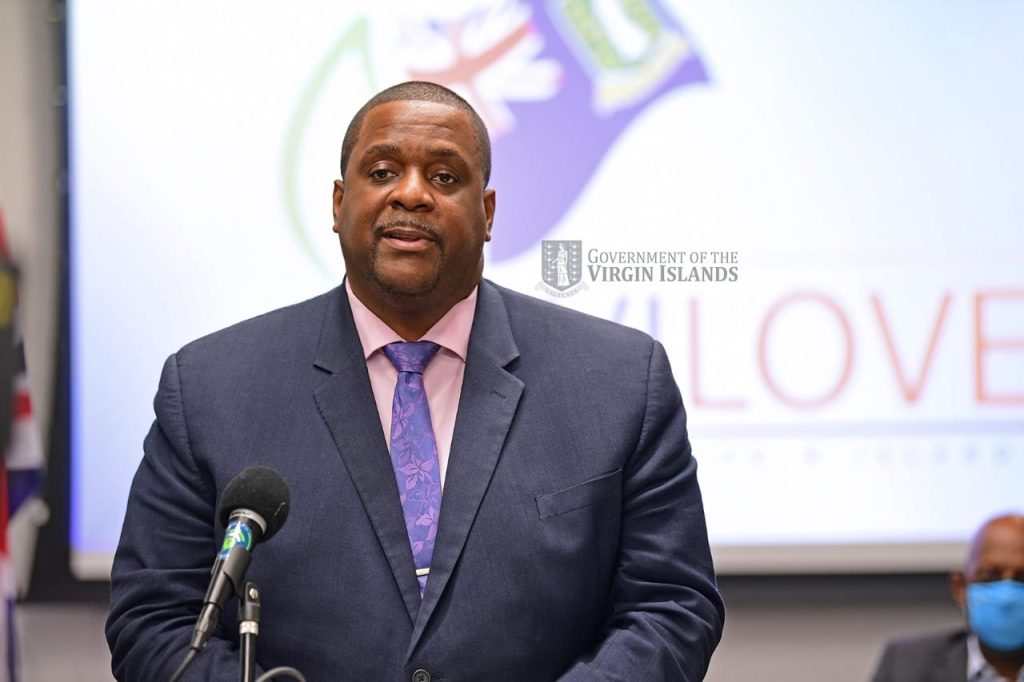
The VI Source is reporting that Former Premier Andrew Fahie has filed an appeal of his 2024 cocaine and money laundering conviction last Tuesday, claiming a lack of evidence, unreliable government agents, and judicial slip-ups.
In February 2024, a Miami jury convicted Fahie of a 2022 plot to import thousands of pounds of cocaine bound for the U.S. mainland after transit through the British Virgin Islands, with the help of the BVI’s then Ports Authority Director, her son, and other government employees not charged.
The Former Ports Authority Director Oleanvine Pickering-Maynard and her son, Kadeem Maynard, who had brokered a side deal to import cocaine for sale in the BVI, both accepted plea agreements and were sentenced to nine and five years, respectively, according to court records. They were both released after less than three years’ imprisonment.
Fahie fought the charges and, after conviction, argued he had played only a minor role in the scheme. He argued further that the U.S. Drug Enforcement Agency was the real ringleader. Fahie was sentenced to 11 years in prison.
In his filing with the 11th District Court of Appeals, Fahie’s attorneys argued three reasons the conviction should be vacated.
According to Court records, Fahie could not be guilty of conspiring to import cocaine because there was no actual cocaine and the fictional narcotics he’d agreed to import were supposedly treated in a way that made them undetectable.
In the appeal, Fahie’s lawyers argued prosecutors knew about the informant’s Mexican designation as unreliable and did not immediately make the defense team aware of it.
Fahie’s attorney Benedict Kuehe wrote in the appeal this egregious misconduct was brought to the attention of the district judge, who refused to dismiss the charges based on government misconduct.
Kuehe said Fahie is entitled to a dismissal of his charges due to the egregious government misconduct and false testimony concerning the finding by a foreign tribunal that the confidential informant was unreliable, because the entire prosecution depended on the informant’s actions and recorded statements, this error caused substantial prejudice to the defendant.
Additionally, he said the evidence did not prove that the defendant conspired to import a substance containing a detectable amount of cocaine, requiring that the drug conspiracy conviction be vacated for insufficient evidence.
After hearing evidence of “magic cocaine” gathered by an allegedly freewheeling undercover narcotics officer, a jury of Fahie’s peers found the former Premier guilty on all counts. The judge asked each juror if their verdict was that Fahie was guilty. All said yes, according to court records.
The Laywer stated a highly unusual thing happened. Two jurors, separately, said they were unsure of Fahie’s guilt. One even wondered what the next steps were in Fahie’s defense. Although not completely unprecedented, attorneys for both sides and the trial judge scrambled for a proper way forward. They needed to respect the sanctity of the jury’s decision as well as the two jurists’ post-trial misgivings.
After speaking with the two jury members, the judge was satisfied they indeed thought Fahie was guilty when they rendered their verdict.
Fahie’s attorneys framed the verdict as less than unanimous.
Kuehe told the appeals court that the jury’s failure to unanimously agree on its verdict requires the court to declare a mistrial or remand the case with instructions for the district court to conduct an evidentiary hearing to determine whether the jury’s verdict was unanimous.
It was not clear when the appeals court might rule on Fahie’s appeal.